
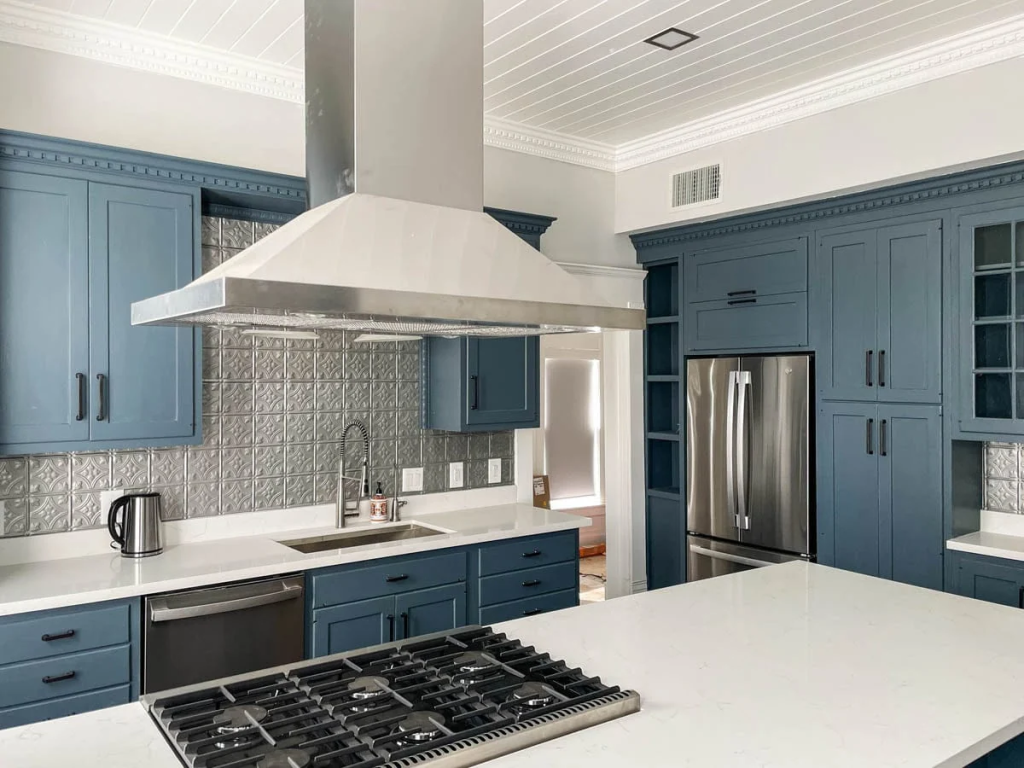
Kitchen ventilation plays an important role in managing smoke, steam, grease, heat, and odors created during cooking. While larger kitchens may accommodate wide ventilation systems, compact cooking areas often require equipment that fits the available space without compromising basic ventilation needs. A 24 inch kitchen hood can be a practical size for smaller cooking surfaces, apartments, compact kitchens, and other layouts where cabinet or wall space is limited.
However, width is only one factor in choosing kitchen ventilation. Airflow, installation type, ducting, cooking habits, noise, filters, and the relationship between the hood and cooking surface all affect performance. Understanding these factors before purchasing can help homeowners choose equipment that matches their kitchen rather than selecting a model based on dimensions alone.
1. Why Does Hood Size Matter?
The width of a kitchen hood affects how effectively it can capture emissions from the cooking surface below. Ideally, the hood should cover the cooking area adequately so that smoke, steam, and grease produced by pots and pans can enter the ventilation zone.
A 24-inch model may be appropriate for a cooking surface with a similar width, provided the manufacturer’s installation requirements are met. However, homeowners should always compare the dimensions of the hood with the actual range or cooktop and consider the recommended clearances.
The EPA recommends using kitchen exhaust while cooking and continuing to operate an outdoor-vented hood for 10–20 minutes after cooking. It also recommends using back burners when possible because they can improve capture by the hood.
2. What Airflow Should You Look For?
Airflow is commonly measured in cubic feet per minute, or CFM. It describes how much air the exhaust fan can move over a particular period.
When selecting a 24 inch kitchen hood, it can be tempting to focus entirely on the highest available CFM rating. However, more airflow is not necessarily better for every kitchen. The appropriate capacity depends on the cooking appliance, fuel type, cooking habits, duct design, and local installation requirements.
A household that frequently fries food or cooks at high temperatures may generate more smoke and grease than one that primarily boils or simmers. Consequently, ventilation requirements should be considered in relation to actual cooking habits.
Duct design is also important. A powerful fan connected to an inefficient duct system may not perform as expected because bends, restrictions, and long duct runs can reduce effective airflow.
3. Should You Choose Ducted or Ductless Ventilation?
Kitchen hoods generally use one of two approaches: ducted exhaust or recirculation.
A ducted hood carries cooking air through a ventilation duct and releases it outside. This approach can directly remove pollutants and moisture from the kitchen.
A ductless hood, by comparison, filters air before returning it to the room. This can be useful where external ducting is impractical, but it does not physically remove the air from the building.
The U.S. Environmental Protection Agency recommends using a range hood that vents outdoors when possible. Outdoor exhaust can help remove pollutants produced during cooking instead of merely filtering and recirculating the air.
Homeowners should therefore determine whether an exterior duct route is available before selecting a hood configuration.
4. What Is a Kitchen Hood Insert?
A kitchen hood insert is a ventilation unit designed to be installed within custom cabinetry or a purpose-built hood enclosure. Instead of functioning as a complete exposed hood, the insert becomes part of the surrounding kitchen design.
This type of system can be useful when homeowners want the ventilation equipment integrated into cabinetry or a custom structure. It also allows greater flexibility in appearance because the visible enclosure can be designed to coordinate with the rest of the kitchen.
Before choosing an insert, homeowners need to confirm the required opening dimensions, electrical connections, duct configuration, minimum installation height, and ventilation specifications. Installation instructions vary between models.
5. How Does Kitchen Layout Affect Installation?
A compact hood may be easier to accommodate than a wider model, but the kitchen layout still needs to be evaluated before installation.
The location of cabinets, walls, ceiling height, electrical connections, and existing ductwork can all affect where the hood can be installed. If the system is ducted, the route to the exterior should be planned before construction or cabinet modifications begin.
A short and relatively direct duct path is generally easier to install than a long route containing multiple turns. Homeowners should follow the manufacturer’s duct specifications because improper duct sizing or routing can affect ventilation performance.
When installation involves electrical work, structural modifications, roofing, or complicated ductwork, qualified professionals may be appropriate.
6. Does Cooking Style Influence Hood Selection?
Yes. Cooking habits are an important part of selecting ventilation.
Boiling water, simmering food, frying, searing meat, stir-frying, and grilling can produce different levels of heat, moisture, smoke, and grease. Someone who cooks frequently at high temperatures may need more capable ventilation than someone whose cooking produces relatively little smoke.
Households should therefore consider how the kitchen is actually used rather than selecting equipment based solely on the hood’s physical dimensions.
A 24 inch kitchen hood may work effectively in an appropriately sized kitchen, but the specific model should still be evaluated based on airflow, capture area, ducting, and the cooking appliance beneath it.
7. How Important Are Filters and Maintenance?
Even an appropriately sized ventilation system requires regular maintenance. Grease and airborne particles can accumulate on filters and surrounding surfaces during cooking.
The EPA recommends regularly cleaning grease filters and nearby cooking surfaces and appliances. Keeping these areas clean can help maintain the ventilation system and reduce grease buildup.
Filter maintenance depends on the type of filter used. Some filters are washable, while others may need replacement at specified intervals. Homeowners should follow the manufacturer’s cleaning and replacement instructions.
Ignoring maintenance can reduce airflow and contribute to unpleasant odors or grease accumulation.
When Is a 24-Inch Hood a Good Choice?
A 24-inch hood can make sense when the cooking appliance and available kitchen space are compatible with that width. It may be particularly suitable for smaller kitchens, compact ranges, apartments, or layouts where wider ventilation equipment would interfere with cabinetry.
However, the smallest possible hood is not automatically the best choice. The hood should provide sufficient coverage for the cooking surface and meet the installation requirements for the appliance.
Homeowners should measure the available space carefully before purchasing. Width, depth, height, duct location, electrical access, and clearance requirements should all be considered together.
How Can You Improve Kitchen Ventilation?
Selecting the right hood is only one part of good kitchen ventilation. Using the system whenever cooking creates smoke, steam, or strong odors can improve indoor air management.
The EPA recommends turning on an outdoor-vented hood while cooking and leaving it running for 10–20 minutes afterward. Opening windows or doors when outdoor conditions permit can provide additional ventilation.
It is also useful to use the rear burners when practical because they are positioned closer to the hood’s capture area. Keeping filters clean and avoiding unnecessary high-temperature cooking can further reduce the amount of smoke and grease released into the kitchen.
Conclusion
Choosing a 24 inch kitchen hood involves more than matching the hood’s width to the available cabinet space. Homeowners should consider the cooking surface, airflow, ducting, installation configuration, cooking habits, noise, filter requirements, and whether the system will exhaust air outdoors or recirculate it. For kitchens with custom cabinetry or a built-in design, a kitchen hood insert can provide another way to integrate ventilation into the overall layout while keeping the visible design streamlined. Ultimately, the right hood is one that fits both the physical dimensions of the kitchen and the demands of everyday cooking. Careful measurements, appropriate ventilation capacity, correct installation, and regular maintenance can help ensure that the system performs effectively over time.
