
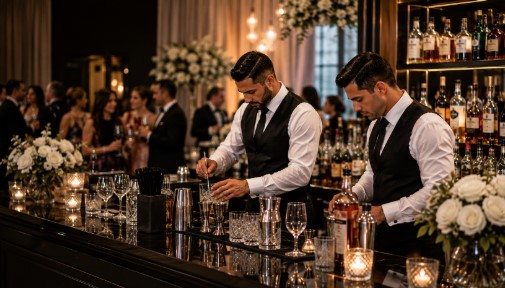
Planning the drinks for a wedding involves more than deciding which beverages to serve. The bar affects guest experience, event flow, staffing, budgeting, venue requirements, and even the amount of preparation needed before the reception begins. A full bar service wedding generally provides guests with a broader selection of beverages, often including spirits, wine, beer, mixers, garnishes, and cocktails, rather than limiting the menu to one or two drink categories.
For couples considering this option, understanding what full bar service involves can make planning more straightforward. It is also important to distinguish between a full bar and an open bar. A full bar describes the range of beverages available, while an open bar generally describes how guests pay for those drinks.
What Does Full Bar Service Mean at a Wedding?
A full bar typically offers a wider beverage selection than beer-and-wine service. Depending on the package and local requirements, it may include spirits, beer, wine, cocktails, mixers, juices, soft drinks, garnishes, and non-alcoholic beverages.
The exact contents vary between services, so couples should request a detailed list before making a decision. Some packages include the alcohol itself, while others provide bartenders and equipment but require the host to purchase the beverages separately. Setup, glassware, ice, refrigeration, mixers, and cleanup may also be handled differently from one service to another.
This makes a full bar service wedding particularly useful when couples want guests to have multiple drink choices without requiring the hosts to manage the bar throughout the reception.
Full Bar vs. Open Bar: What Is the Difference?
These terms are sometimes used interchangeably, but they describe different aspects of wedding beverage planning.
A full bar focuses on what is available. It may include liquor, wine, beer, and mixed drinks. An open bar focuses on who pays for the drinks. Under an open-bar arrangement, the host typically covers the beverage costs rather than asking guests to pay individually.
Therefore, a wedding can technically have a full bar with different payment structures. Couples should ask vendors to clarify whether the quoted package refers to beverage selection, service, payment method, or a combination of these.
What Is Usually Included?
The contents of a wedding bar package can vary considerably, but several components are commonly considered when planning beverage service.
Bartenders
Professional bartenders manage drink preparation and guest service. Staffing requirements depend on guest numbers, menu complexity, venue layout, and service duration. Additional bartenders may be necessary for larger receptions or events where cocktails require more preparation.
Bar Equipment
A complete service may involve portable bars, coolers, ice bins, bar tools, glassware, storage equipment, and other supplies. Couples should establish who is responsible for transporting, setting up, and removing this equipment.
Mixers and Garnishes
Cocktails require more than spirits. Mixers, juices, soda, syrups, fruit, herbs, and other garnishes can affect both the menu and the amount of preparation required. These details should be included in the service agreement rather than assumed.
Non-Alcoholic Drinks
Water and non-alcoholic beverages are important components of responsible wedding hospitality. Guests may not drink alcohol for many reasons, so providing appealing alternatives helps ensure that the beverage service accommodates everyone.
How Much Alcohol Should a Wedding Have?
Alcohol planning depends on several variables, including guest count, reception length, season, venue, guest preferences, and the type of beverages being served.
A commonly cited planning guideline is approximately one drink per guest per hour, although actual consumption can vary substantially. Wedding planners also recommend considering the event timeline and allowing for different drinking patterns during cocktail hour, dinner, and later portions of the reception.
Instead of relying solely on a general formula, couples should discuss expected consumption with their bar provider. The vendor may be able to help estimate quantities based on the number of guests and planned service hours.
Questions to Ask Before Booking Bar Service
Before choosing a full bar service wedding package, couples should ask several practical questions.
First, determine whether alcohol is included in the quoted price. If it is not, establish whether the provider can supply a purchasing list or assist with estimating quantities.
Next, ask whether bartenders, bar equipment, ice, mixers, garnishes, glassware, cups, and cleanup are included. It is also worth confirming how many bartenders will be present and how early the team will arrive for setup.
Venue requirements should also be checked. Some locations have specific rules concerning alcohol service, licensed vendors, insurance, permits, or who may supply alcoholic beverages. Requirements differ by jurisdiction, so couples should verify the applicable rules for their location rather than assuming that one set of regulations applies everywhere.
Making the Bar Work for the Entire Reception
A wedding bar should complement the event rather than become a source of logistical problems. Couples can simplify service by selecting a manageable cocktail menu, providing popular beverage categories, and ensuring that water and non-alcoholic options remain readily available.
The physical location of the bar also matters. It should be accessible without creating unnecessary congestion around dining areas, entrances, or dance floors. For outdoor receptions, weather protection, refrigeration, electricity, and safe storage may require additional planning.
Ultimately, the best full bar service wedding setup is one that matches the guest list, venue, budget, schedule, and desired level of service. Careful planning allows couples to offer variety while keeping the operational side of the reception organized.
Conclusion
A well-planned wedding bar combines beverage selection, professional service, equipment, staffing, responsible planning, and coordination with the rest of the reception. Understanding the distinction between a full bar and an open bar is an important first step because the two terms address different parts of the beverage experience. Couples should also review exactly what their package includes and confirm responsibilities for alcohol, mixers, glassware, ice, setup, cleanup, and staffing. When food and beverage teams are involved, coordinating private event catering with bar operations can further reduce confusion during the reception. With clear planning and realistic expectations, a full bar service wedding can give guests a broad selection of beverages while allowing the couple and their families to focus on celebrating rather than managing the bar.
