
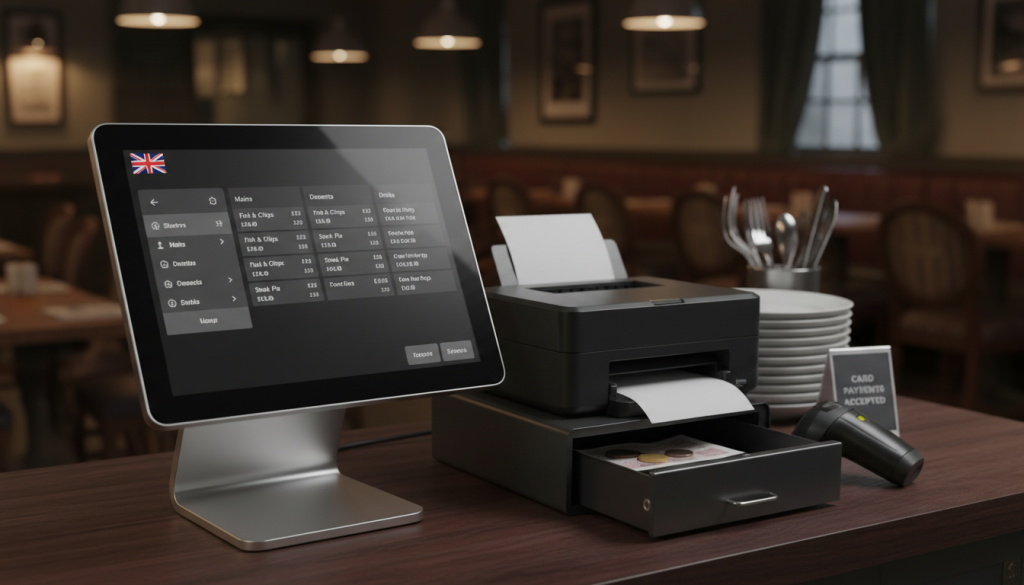
In the fast-paced world of the British hospitality industry, the difference between a thriving bistro and a struggling one often comes down to efficiency. As we move deeper into a digital-first economy, the traditional cash register has become a relic of the past. For modern restaurateurs, a specialized restaurant EPOS system UK venues can rely on has become the most critical tool in their arsenal.
From the bustling streets of London to the cozy pubs of the Cotswolds, owners are realizing that a point-of-sale system is no longer just about processing payments—it’s about managing the entire ecosystem of a dining establishment.
The Evolution of the Dining Experience
The UK dining public has high expectations. We expect speed, accuracy, and a seamless transition from sitting down to settling the bill. When a kitchen is backed up or an order is forgotten, it’s rarely a failure of the staff’s will; it’s usually a failure of the system.
Implementing a robust pos system for restaurants bridges the gap between the front-of-house and the kitchen. When a server takes an order on a handheld device, it doesn’t just sit in a notebook. It is instantly transmitted to the kitchen display, logged in the inventory, and prepared for the final invoice. This synchronization reduces human error and allows staff to focus on what they do best: providing excellent service.
Tailoring Technology to the UK Market
Not all systems are created equal. The UK market has specific needs, from VAT compliance to integrated “Making Tax Digital” reporting. This is where a dedicated restaurant EPOS system proves its worth over a generic retail till.
A system designed for hospitality understands the nuances of:
- Table Management: Real-time floor plans that show which tables are hovering over dessert and which are waiting for the check.
- Ingredient Tracking: Knowing exactly how much stock is left in the walk-in fridge to prevent “menu 86ing” mid-service.
- Complex Billing: The ability to split bills by item or seat with a single tap—a notorious headache for UK servers during busy Friday nights.
Protecting Your Margins in a High-Cost Economy
With rising energy costs and the fluctuating price of produce, managing a restaurant’s “GP” (Gross Profit) has never been more challenging. Modern pos systems for restaurants offer deep-dive analytics that were previously only available to major global chains.
By analyzing sales data, owners can identify their “star” dishes—those with high profit and high popularity—and their “plowhorses”—items that sell well but cost too much to produce. Having this data at your fingertips allows for smarter menu engineering, ensuring that every plate leaving the kitchen contributes to the business’s longevity.
The “Human Touch” through Automation
It might seem counterintuitive, but better technology actually leads to a more “human” experience. When the administrative burden of taking orders and calculating totals is handled by a reliable EPOS, your team is free to engage with guests. They can spend more time describing the specials or checking in on the quality of the meal, rather than staring at a screen or running back and forth to the kitchen.
Furthermore, integrated loyalty programs allow independent restaurants to recognize their regulars. Knowing a customer’s “usual” drink or their preference for a window seat creates the kind of personalized experience that keeps people coming back in an increasingly competitive market.
Choosing the Right Partner
For UK business owners, local support is paramount. Choosing a provider like Cube POS ensures that if something goes wrong during a Saturday night rush, you aren’t waiting for a support center in a different time zone to wake up. Reliable hardware combined with intuitive software creates a foundation that allows a restaurant to grow from a single site to a multi-location brand.
Conclusion
The shift toward integrated technology is not just a trend; it is the new standard for the UK hospitality sector. Investing in a professional restaurant EPOS system UK managers trust is an investment in the sanity of your staff and the satisfaction of your customers. In the end, the best technology is the kind that disappears into the background, allowing the food and the atmosphere to take center stage.
